Gelatin, whey, and what “may contain” really means
Gelatin, whey, krill, lecithin, bee products: what supplement source terms mean, how contains and may-contain differ, and why silence is not a guarantee.
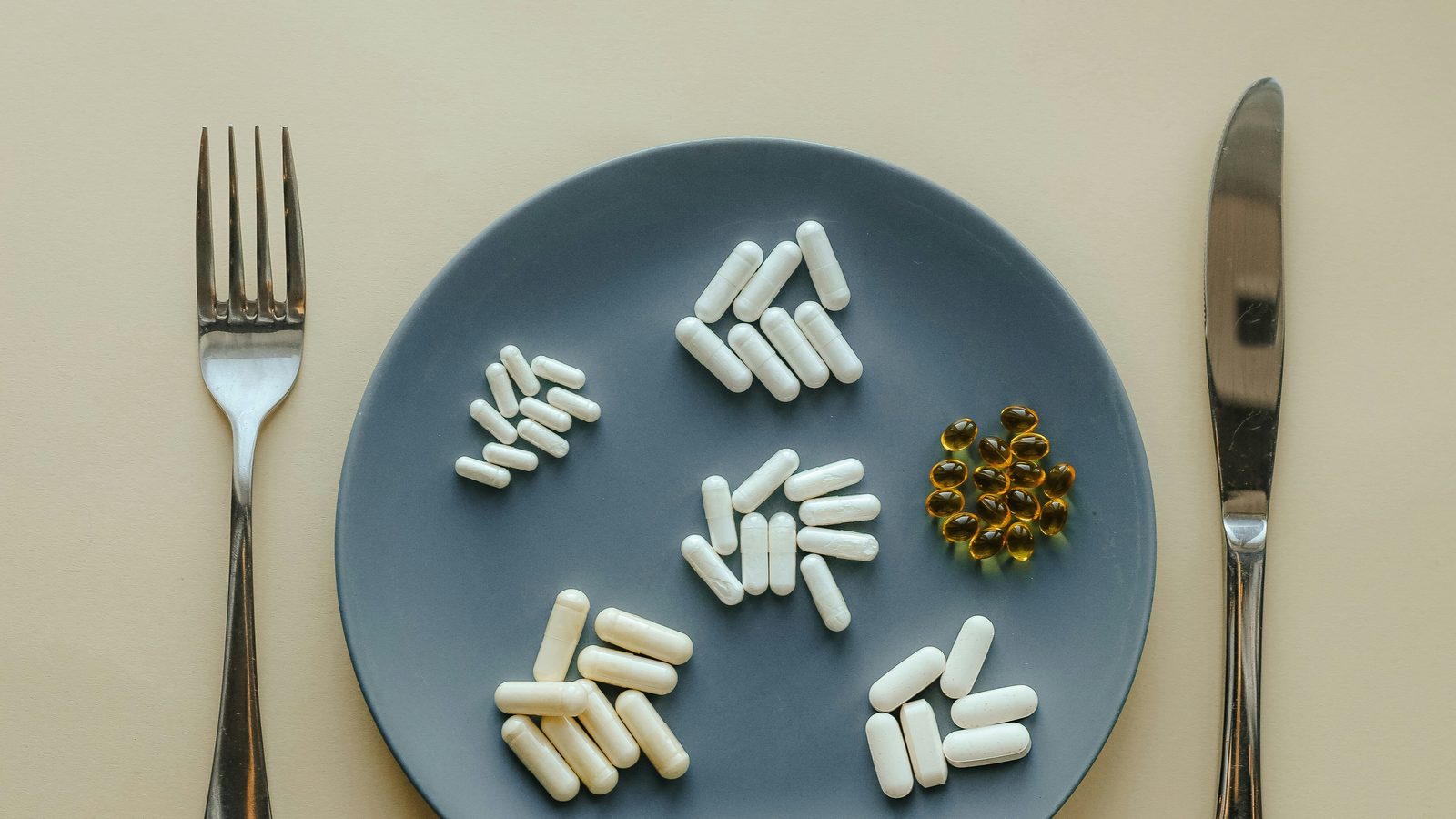
A supplement label answers two different questions. The obvious one is what is in it. The less obvious one is what it was made from. Two products with an identical active ingredient can still be very different for someone who avoids shellfish, pork, dairy, or bee products. This guide explains the source terms that show up on labels, how allergen statements work, and why "no statement" is not the same as "safe".
Why the source matters
Four groups of people read labels for the source, not just the ingredient:
- People with allergies, for whom trace amounts can matter.
- People following religious or cultural food rules (halal, kosher), for whom the animal and the process both matter.
- Vegetarians and vegans, for whom the capsule shell can be the deciding factor.
- People with intolerances, such as lactose or gluten, who tolerate small amounts but want to know what they are getting.
The same label has to serve all four, which is why source words are worth learning.
The capsule and the fillers
Most of the surprises are not in the active ingredient. They are in the parts of the product that carry it:
- Gelatin capsules and gummies are made from animal collagen. Unless the label says otherwise, assume bovine (cow) or porcine (pig); fish gelatin exists but is usually named as such. More products fail a vegetarian, kosher, or halal check on the capsule alone than on the active ingredient.
- Vegetable capsules are typically made from HPMC (hypromellose, a plant-derived cellulose) or pullulan. Labels often say "veggie capsule" or "vegan capsule."
- Lactose is sometimes used as a filler in tablets. It is a milk sugar, so it is a dairy-derived ingredient even though the product is not a food.
- Magnesium stearate can be plant- or animal-derived. It is present in tiny amounts, but some certification schemes require it to be plant-sourced.
- Carrageenan (a seaweed extract used in softgels) and silicon dioxide (an anti-caking agent) are not animal-derived, but they appear in "other ingredients" lists and are worth recognizing.
Where common ingredients come from
The ingredient name often hides the source. A short map of the most common cases:
| Label term | Typical source | Why it matters |
|---|---|---|
| Fish oil, omega-3 (EPA/DHA), marine collagen | Fish | Fish allergy; not vegetarian. Algal omega-3 is the plant-derived alternative. |
| Krill oil | Crustacean | Shellfish (crustacean) allergy |
| Glucosamine, chitosan | Usually shellfish shells | Shellfish allergy; some glucosamine is made by fermentation and is labelled "shellfish-free" |
| Calcium from oyster shell or coral | Mollusc | Mollusc allergy, which is listed separately from crustaceans in some countries |
| Whey, casein, lactoferrin, colostrum | Milk | Dairy allergy or lactose intolerance |
| Egg-white protein, lysozyme, lecithin (sometimes) | Egg | Egg allergy |
| Lecithin, isoflavones, soy protein | Soy (lecithin can also be sunflower) | Soy allergy |
| Propolis, royal jelly, bee pollen | Bee products | Bee-product allergy; pollen sensitivity; not vegan |
| Vitamin D3 (cholecalciferol) | Usually lanolin from sheep's wool; lichen-derived versions exist | Not vegan unless labelled lichen-sourced |
| Collagen, chondroitin, pancreatin | Cow, pig, or fish tissue | Religious rules; vegetarian status; specific animal matters for halal and kosher |
| Wheat germ oil, barley grass, some "natural flavours" | Grains that contain gluten | Celiac disease and gluten sensitivity |
| Sesame oil, peanut oil, tree-nut oils | Seeds and nuts | Seed and nut allergies |
| Tinctures and liquid extracts | Often preserved in alcohol | People avoiding alcohol for religious or health reasons |
| Beet root, maca, ginger, turmeric | Root vegetables | Root-vegetable sensitivities and cross-reactions |
| Mushroom extracts (reishi, lion's mane, mycelium powders) | Fungi | Mushroom and mould sensitivities |
| Pomegranate extract, citrus bioflavonoids | Fruit | Citrus and pomegranate sensitivities, which some people report and some apps let you record |
Two details that trip people up: "natural flavours" can be derived from almost anything, and "may contain traces of" applies to the factory, not the recipe.
Sensitivities that are not allergies
Some labels describe a reaction that is real but not immune-mediated. Recording them is useful all the same, since they set what is comfortable for you:
- Lactose intolerance is a shortage of the enzyme that digests milk sugar. Hard cheeses and lactose-free milk are usually tolerated; a milk allergy is different and involves milk protein.
- Gluten sensitivity without celiac disease is managed by tolerance rather than strict avoidance. Celiac disease requires strict avoidance; confirming it is a clinical question, not a label question.
- Caffeine sensitivity is common in supplements that use green-tea or guarana extracts without saying "caffeine" prominently. Look for "caffeine content per serving."
- MSG sensitivity is reported by some people; glutamate can appear on labels as monosodium glutamate, yeast extract, or hydrolysed protein.
Reading the allergen statements
Three phrases carry most of the meaning:
- "Contains: milk, soy." A mandatory declaration. The listed allergen is an ingredient.
- "May contain" / "Made in a facility that also processes." This is precautionary allergen labelling (PAL). It is voluntary in most countries, is not standardized, and does not tell you how likely or how much cross-contact there is. A 2024 update from the World Allergy Organization notes that PAL is applied inconsistently and that consumers often cannot tell whether a risk assessment was done at all.
- "Free from" / "Gluten-free." A claim, which in many jurisdictions has a legal threshold (for gluten, commonly 20 parts per million).
The rule that follows from this: the absence of a statement is not a guarantee. A product with no "may contain" line may simply come from a company that does not use PAL. If an ingredient's source is unknown to you, record "unknown" as its own state, separate from "safe."
Countries name different allergens
Mandatory allergen lists are not the same everywhere, which is why a label from one country can look incomplete in another:
- United States — nine major allergens under FALCPA and the FASTER Act: milk, egg, fish, crustacean shellfish, tree nuts, peanuts, wheat, soybeans, and sesame (added in 2023). Molluscs are not on the federal list.
- Canada — a broader priority list that also includes mustard, sesame, molluscs, and sulphites.
- Australia and New Zealand — the Food Standards Code requires declaration of lupin, sesame, molluscs, and others alongside the common eight.
- Singapore — follows the international Codex list, with supplements regulated as food.
If you are buying across borders, the safest habit is to read the full ingredient list rather than relying on the bolded allergen line.
References (3)
- Food Allergies — major food allergens, FALCPA and the FASTER Act — U.S. Food and Drug Administration
- Precautionary labelling of foods for allergen content: are we ready for a global framework? (World Allergy Organ J 2014;7:10) — World Allergy Organization Journal
- Time to ACT-UP: Update on precautionary allergen labelling (PAL) (2024) — World Allergy Organization Journal
Wellthrive
Get early access to Wellthrive
Join the waitlist for Wellthrive — a nutrition and wellness app for clearer, more practical health decisions.
Get early access to Wellthrive