When supplements help (and when they don't)
Supplements are useful in some situations and pointless in others. A practical framework for telling the difference.
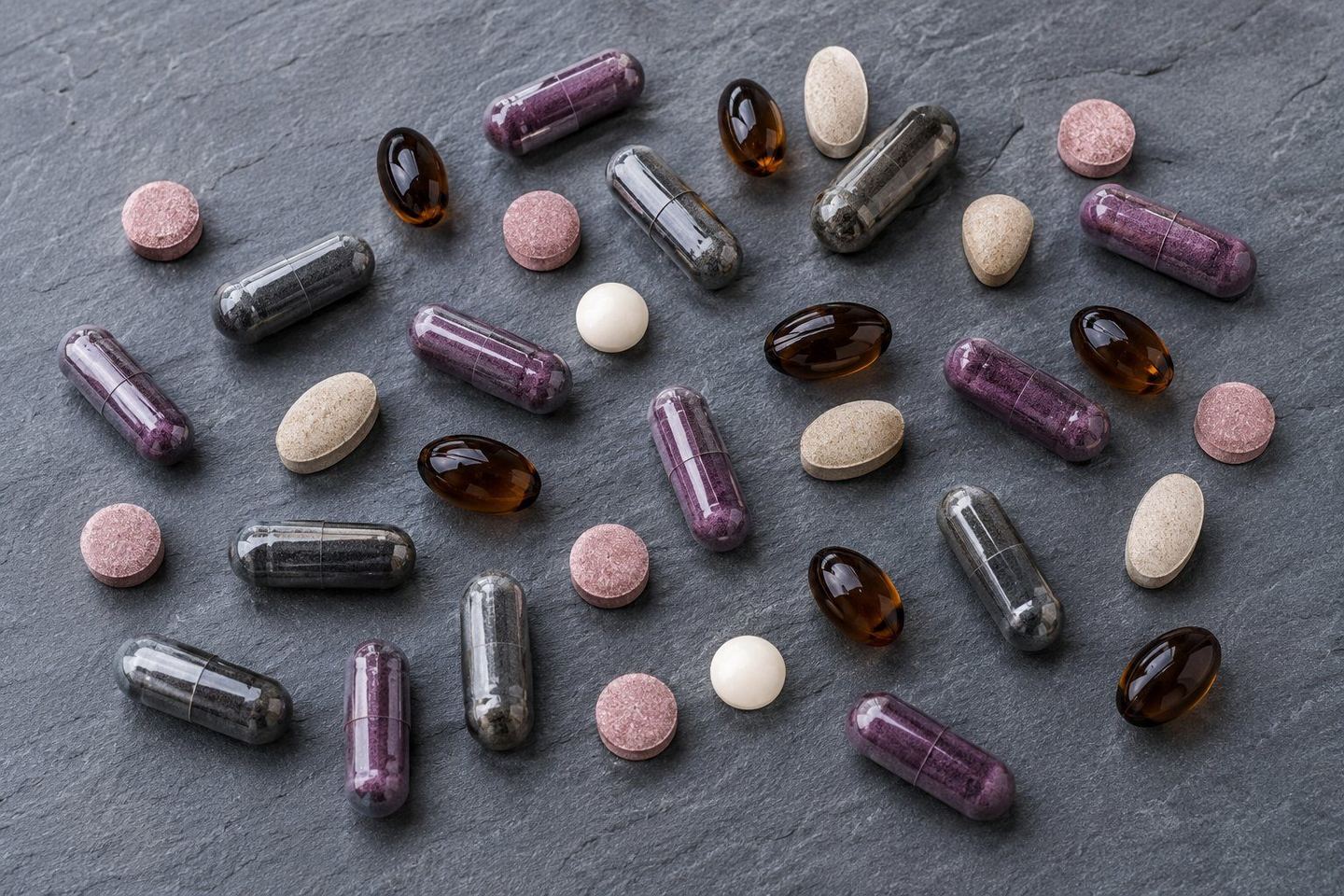
Supplements occupy a strange middle ground. They're not food, not medicine, and not magic — but the marketing around them often implies all three. A more useful framing is to ask, situation by situation, whether a supplement is likely to add value or just complicate the routine.
Key points
- Supplements aren't food, medicine, or magic — the useful question is whether one adds value in a specific situation.
- They tend to help for a documented gap food can't close, a guided medical context, or a short-term narrow target.
- They tend not to help when replacing a poor diet, treating vague symptoms with broad blends, or stacking many products.
- Sold without a prescription doesn't mean risk-free — some interact with medications or are harmful at high doses.
Situations where supplements often help
There are a few patterns where evidence and clinical experience genuinely line up.
A documented gap that food can't reliably close. Vitamin D in regions with limited sun exposure, B12 for those who don't eat animal foods, iron during certain life stages, omega-3s for people who don't regularly eat fatty fish — these are well-described scenarios where targeted supplementation tends to help.
A specific medical context, under professional guidance. Pregnancy, recovery from surgery, certain chronic conditions, or medications that deplete specific nutrients can all create needs that food alone won't reach. The keyword here is guided — these are not situations to self-diagnose from a podcast.
Short-term, narrow targets. Examples include creatine for strength training, electrolytes during heavy sweat loss, or melatonin used briefly for shifting time zones. These have specific, well-studied use cases.
In each of these examples, the supplement does one job, and that job is reasonably well understood.
Situations where supplements often don't help
Most of the supplement industry lives in the second category.
Replacing a poor diet. A multivitamin layered on a week of takeout doesn't restore what whole foods provide. The matrix, fiber, and satiety simply aren't there.
Treating vague symptoms with broad-spectrum products. "Energy," "focus," "immunity," and "wellness" blends usually combine many ingredients at low doses that look impressive on a label but rarely do much in the body.
Stacking dozens of products. Beyond a certain point, more products mean more interactions, more cost, more cognitive load, and more opportunities for unintentional duplication or excess. More is not better — it's usually just more.
Acute health concerns. Supplements are not the right tool for symptoms that need a diagnosis. They can also dangerously delay appropriate medical care.
At a glance: value vs. clutter
| Often adds value | Often just clutter |
|---|---|
| A documented gap food can't reliably close (vitamin D, B12, iron, omega-3s) | Replacing a poor diet with a multivitamin |
| A specific medical context, under professional guidance | Treating vague "energy/focus/immunity" with broad blends |
| Short-term, narrow targets (creatine, electrolytes, brief melatonin) | Stacking dozens of products, or acute concerns that need a diagnosis |
A simple decision framework
Before adding anything to a routine, three questions usually clarify the decision.
1. What problem am I actually trying to solve? "Feel better" is a wish, not a problem. "Iron levels are low on labs" or "I avoid fish entirely" are problems with reasonable supplement-based answers.
2. What's the food-first option? Could a small, repeatable change in meals reach the same goal? If yes, that's almost always the better starting point.
3. What evidence supports the specific product I'm considering — at this dose, in this form, for this purpose? Marketing claims aren't evidence. Independent reviews, large studies, and qualified clinicians are.
If a supplement passes all three filters, it's a reasonable candidate. If it doesn't, it's probably noise.
On safety and interactions
It's tempting to think of supplements as inherently safe because they're sold without a prescription. They're not. Some interact with medications. Some compete for absorption with each other. Some can be harmful at high doses, especially fat-soluble vitamins and certain minerals.
If you take any prescription medication or have a chronic condition, run new supplements past a qualified healthcare professional before starting them.
The bottom line
Supplements are a tool, not an identity. They earn a place in a routine when they solve a defined problem that food can't reliably solve, in a form and dose that's actually supported by evidence. The rest is mostly clutter.
References (3)
- Academy of Nutrition and Dietetics — Micronutrient Supplementation position (2018) — Journal of the Academy of Nutrition and Dietetics
- USPSTF — Vitamin, Mineral & Multivitamin Supplementation to Prevent CVD and Cancer (JAMA, 2022) — JAMA / U.S. Preventive Services Task Force
- NIH Office of Dietary Supplements — Multivitamin/Mineral Fact Sheet — NIH Office of Dietary Supplements
Wellthrive
Get early access to Wellthrive
Join the waitlist for Wellthrive — a nutrition and wellness app for clearer, more practical health decisions.
Get early access to Wellthrive