Can supplements change your lab results?
A supplement can change a lab result by changing what the test measures, or by interfering with the test itself. How each works, with vitamin D and biotin.
In short: yes, in two different ways. A supplement can change the amount of something in your blood, or it can throw off the test that measures it.
The first is a real change; the second is a misleading reading. Knowing which is which explains why it matters to mention supplements before a blood test.
Two ways a supplement can show up on a report
| Type | What changes | Example | What the number reflects |
|---|---|---|---|
| A real change | The amount of the substance in your blood | Vitamin D supplements and the usual vitamin D blood test | What you have been taking, along with sun and food |
| Interference | The test's chemistry, not your body | High-strength biotin and tests built on biotin chemistry | A reading that can come out falsely high or falsely low |
When the test is measuring what you took
Some tests are meant to capture your intake. The usual blood test for vitamin D checks the level of 25-hydroxyvitamin D. The body makes this form from the vitamin D it gets from sunlight, food and supplements.
According to the NIH Office of Dietary Supplements, this level reflects both sources: vitamin D the body makes itself and vitamin D from food and supplements. If you have been taking vitamin D, the result is supposed to show it.
That makes context part of the result: what you take, and for how long, belongs next to the number.
When a supplement confuses the test
Biotin, one of the B vitamins, is a well-documented example of the second kind. Many common blood tests use biotin as one of their working parts: inside the test, biotin is paired with a protein. A lot of extra biotin in a blood sample can get in the way of that pairing.
The Office of Dietary Supplements notes that taking biotin beyond recommended intakes can cause "clinically significant falsely high or falsely low" test results. In other words, the errors can be big enough to change how a result is read. The tests involved include some hormone tests and some vitamin D tests, so the two rows of the table above can even meet in a single result.
The amounts are the detail that matters. The Daily Value for biotin is 30 mcg (micrograms) for adults. In a 2017 study in JAMA, six healthy adults took 10 mg of biotin a day (10,000 mcg) for seven days. Of the 23 biotin-based tests the researchers ran, 9 (39%) showed interference. The readings moved because of the biotin in the samples, which is exactly what makes them false readings.
A false reading isn't a change in your body. It's a test that couldn't measure cleanly.
Why it helps to say what you take
Neither kind of change announces itself on the printout. A vitamin D result carries no note saying a supplement was involved, and a reading pulled off course by biotin looks like any other number. That is why MedlinePlus, the U.S. National Library of Medicine's consumer health site, lists "Telling your provider about any medicines, vitamins, or supplements that you are taking" among the usual steps before a lab test.
A short list to bring to a blood draw:
- Everything you take, including multivitamins, single nutrients, herbal products, and anything you take only now and then.
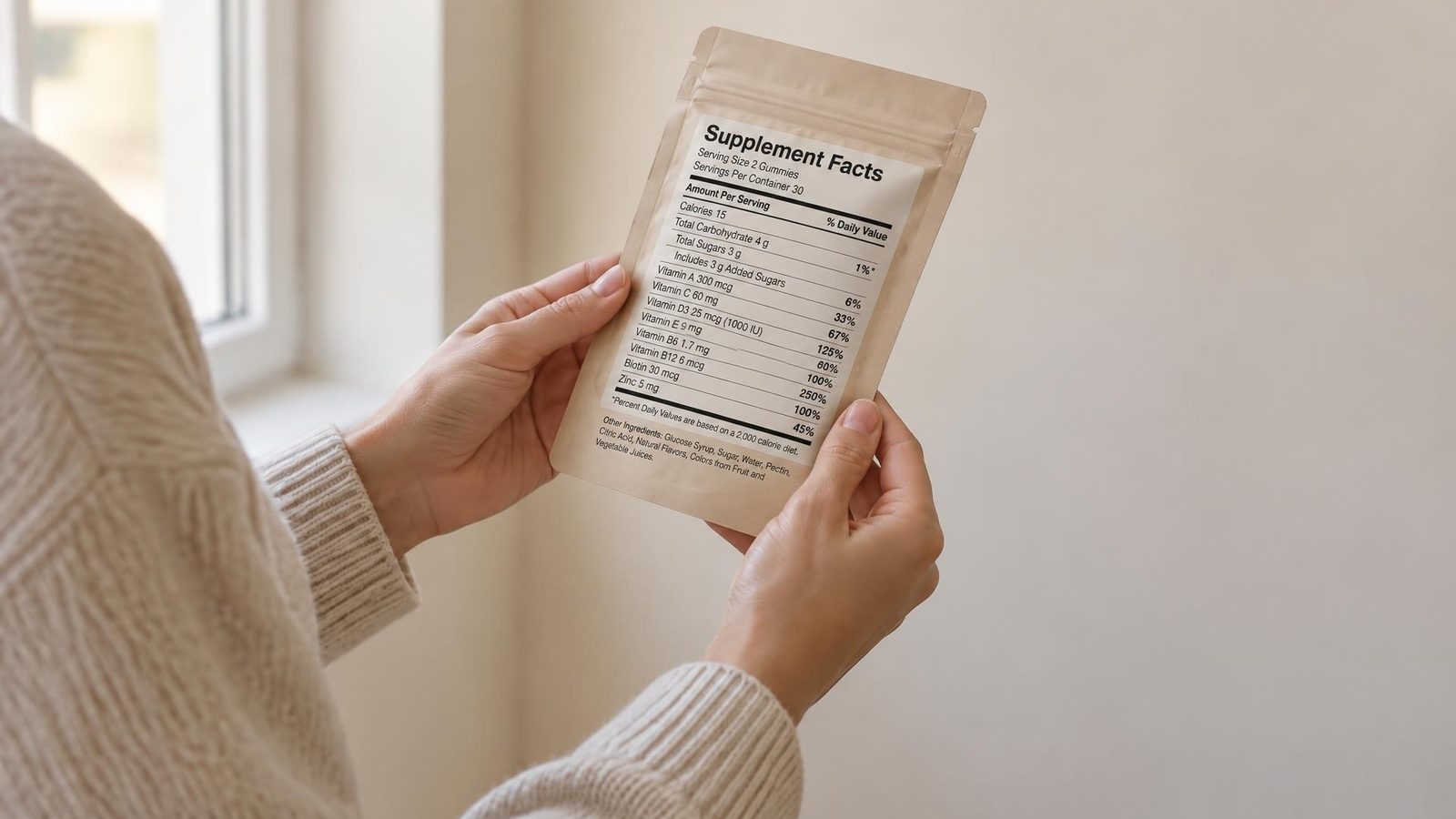
- The amounts, copied from each Supplement Facts panel rather than just the product names. If two products both list biotin, the amounts add up.
- Recent changes, such as anything you started or stopped in the past few weeks.
- A question before pausing anything. MedlinePlus is explicit about medicines: "don't stop taking any medicines unless your provider tells you to." A pause before a test is something to arrange with your provider in advance, not to guess at.
A lab result is a measurement taken on one day, under one set of conditions, and supplements can be part of those conditions. Some change what is in the blood; a few change how the blood gets measured. The list of what you take is what lets anyone reading the result tell the two apart.
References (5)
- Vitamin D — Health Professional Fact Sheet — NIH Office of Dietary Supplements
- Biotin — Health Professional Fact Sheet — NIH Office of Dietary Supplements
- Association of Biotin Ingestion With Performance of Hormone and Nonhormone Assays in Healthy Adults (Li et al., 2017) — JAMA
- How to Prepare for a Lab Test — MedlinePlus, U.S. National Library of Medicine
- Preparing for a Blood Test (patient leaflet) — York and Scarborough Teaching Hospitals NHS Foundation Trust
Wellthrive
Get early access to Wellthrive
Join the waitlist for Wellthrive — a nutrition and wellness app for clearer, more practical health decisions.
Get early access to Wellthrive